

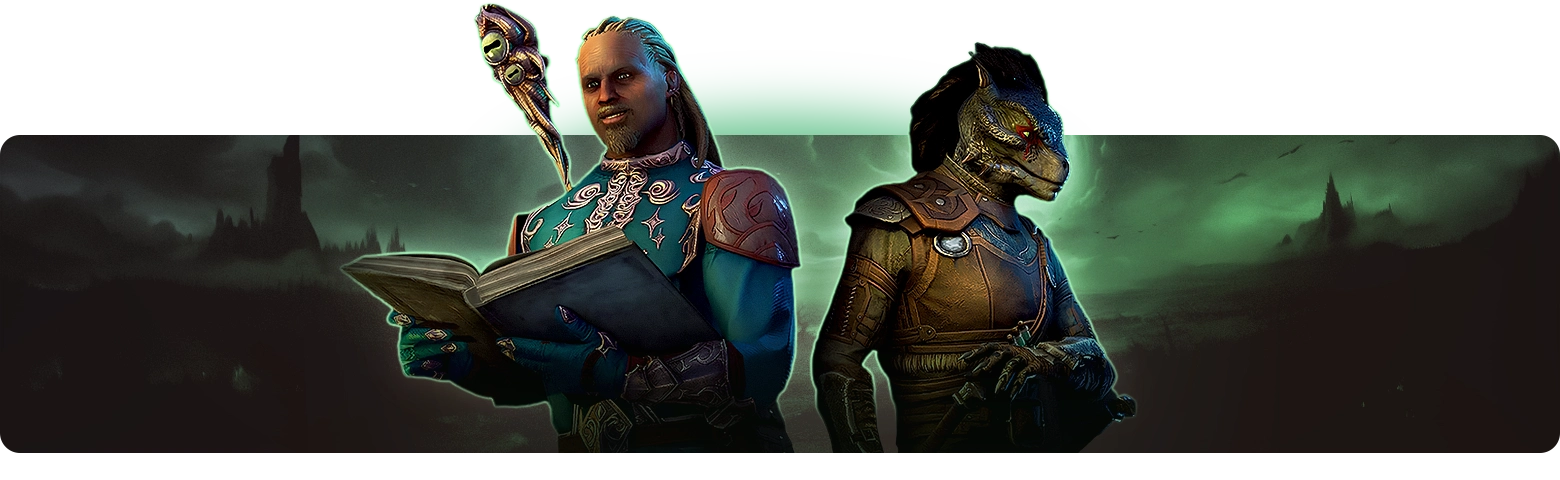
ESO Companions Guide
Companions in The Elder Scrolls Online are NPC allies with their own abilities, equipment, progression, and rapport. They can help a solo character by tanking, healing, or dealing damage. You choose their skills and gear for the role you need. This guide explains how to recruit the available companions, how their progression differs from yours, and what to change when a companion is struggling in combat.
Which companions can you recruit?
The available roster includes eight companions. Bastian Hallix and Mirri Elendis come from Blackwood; Ember and Isobel Veloise from High Isle; Azandar al-Cybiades and Sharp-as-Night from Necrom. Zerith-var and Tanlorin are acquired through the Crown Store or ESO Plus access, then recruited through their own quests. The exact quest and starting location depend on the companion.
| Companion | Access and starting area | Useful role |
|---|---|---|
| Bastian Hallix | Blackwood, near Deepscorn Hollow | Support or tank setup |
| Mirri Elendis | Blackwood, near Doomvault Vulpinaz | Healing or damage |
| Ember | High Isle, Tor Draioch | Damage or healing |
| Isobel Veloise | High Isle, Castle Navire | Tank or healing |
| Azandar al-Cybiades | Necrom, Cipher's Midden in Apocrypha | Tank or group support |
| Sharp-as-Night | Necrom, Telvanni Peninsula | Healing or ranged damage |
| Zerith-var | Crown Store or ESO Plus; recruitment in Reaper's March | Melee tank or support |
| Tanlorin | Crown Store or ESO Plus; recruitment in Auridon | Damage |
Completing a companion's introductory quest adds its collectible to the Collections menu under Allies. You can then summon it on that character. A second character must complete the introductory quest too, even if another character on the account has already recruited the companion. Combat level and many skill advances are shared across your account, while rapport and personal quests belong to each character's relationship with that companion.
The existing ESO Companions Unlock service page covers companion unlocks.
How to summon and use a companion
Open Collections, choose Allies, then Companions to summon one you have recruited on the current character. You can have one companion or one assistant active at a time. Companions may be dismissed in group instances when the player limit is reached, because players take priority. They cannot be summoned in PvP areas, solo arenas, or housing, and you cannot summon one while already in combat.
Companions help in combat but do not replace other players. You can direct one to attack or pull back with companion commands. It will attempt to block heavy attacks, interrupt some enemies, and use its abilities when their conditions and cooldowns allow. Those reactions are imperfect, so position your character and choose the companion's ability bar with the encounter in mind.
Abilities are tried in priority order from left to right when the target and skill conditions are met. Put the most important heal, taunt, or support ability ahead of less urgent actions. Weapon and armor choices also affect which skills the companion can use. For instance, a tank build needs access to a taunt and enough survival tools; an offensive bar alone will not keep an enemy focused on the companion.
Levels, skill lines, and rapport
Companions gain combat experience while fighting beside you, up to level 20. More combat levels unlock additional ability slots and class skills; the Ultimate becomes available at the level cap. Class lines advance with combat level, weapon and armor lines advance through combat with the relevant equipment, and guild lines advance through their associated daily quests. Companion abilities do not use player skill points or morphs.
Rapport is separate from combat level. Actions a companion approves or dislikes change that relationship, and higher rapport can lead to personal quests. Very low rapport can make a companion leave for a time. Rapport is tied to the character playing with that companion, even while the companion's combat progression is shared with other characters on the account. Check the Companion menu to see the current relationship and slotted skills.
Companion equipment and traits
Companion equipment is distinct from player gear. You can buy basic white pieces from appropriate merchants, while higher-quality pieces with traits can drop from monsters, particularly bosses when an active companion is present. Companion gear cannot be crafted, enchanted, deconstructed, improved, or researched. It has no level requirement, and its equipped visual style is controlled through companion appearance options rather than the item itself.
Choose traits for the role instead of using one fixed gear recipe for every ally. Quickened reduces ability cooldowns and is useful when frequent casts matter. Soothing supports healing; Vigorous increases health; Bolstered reduces damage taken. Aggressive, Focused, and Shattering support different damage setups. Other companion traits affect Ultimate generation or buff duration. Read the trait shown on each dropped piece before replacing equipment that already suits the build.
Gear alone does not define the companion's role. A healer also needs healing abilities slotted and room to cast them; a tank needs a taunt and defensive tools. When performance feels poor, first inspect the ability order, weapon, armor, and whether the skills actually trigger in the fights you play.
Which companion fits your build?
If your character deals damage but struggles to survive, Isobel or Azandar can serve as a tank, and Sharp-as-Night can be built for healing. Zerith-var offers another durable melee option. If your character already tanks or heals, Tanlorin, Ember, or a ranged Sharp-as-Night can provide damage. Mirri and Bastian remain useful when their abilities or personalities fit your preferred playstyle. There is no permanent winner across all roles and all content.
Try a companion in the content you actually run. Overland fights, world bosses, and group dungeons stress an ally differently. A companion who survives ordinary enemies may need a more defensive bar for a boss. If a group fills the available player slots, companions are dismissed; build your character so it still functions without an NPC ally.
Appearance and personal quests
Companions can wear compatible costumes and use mounts from your collection. Outfit Stations let you configure a dedicated outfit for each companion, while some appearance items have restrictions. Head armor is not shown on companions. Their personal quests and dialogue add character to the system, so combat performance need not be your only reason to recruit one.
For more ESO content, the store's ESO boosting service category remains available.
FAQ
Complete that companion's introductory quest. Blackwood, High Isle, and Necrom each contain a pair; Zerith-var and Tanlorin require Crown Store or ESO Plus access before their recruitment quests.
Choose by role. Isobel and Azandar are strong tank options, Sharp-as-Night can heal or deal ranged damage, and Tanlorin suits a damage build. Your own character's needs decide the better fit.
Yes. Active companions gain experience from combat. Levels and many skill advances are account-wide, while rapport and introductory quests are character-specific.
One companion or assistant may be active at once. In group instances, companions can be dismissed when players fill the available places.
